
Successful Implementations Start Before Go-Live
Implementing new legal technology is one of the most significant investments a law firm can make. The goal is straightforward: improve efficiency, streamline operations, and equip attorneys and staff with better tools to serve clients.
Yet even the best software can fall short if the implementation isn’t planned and executed properly.
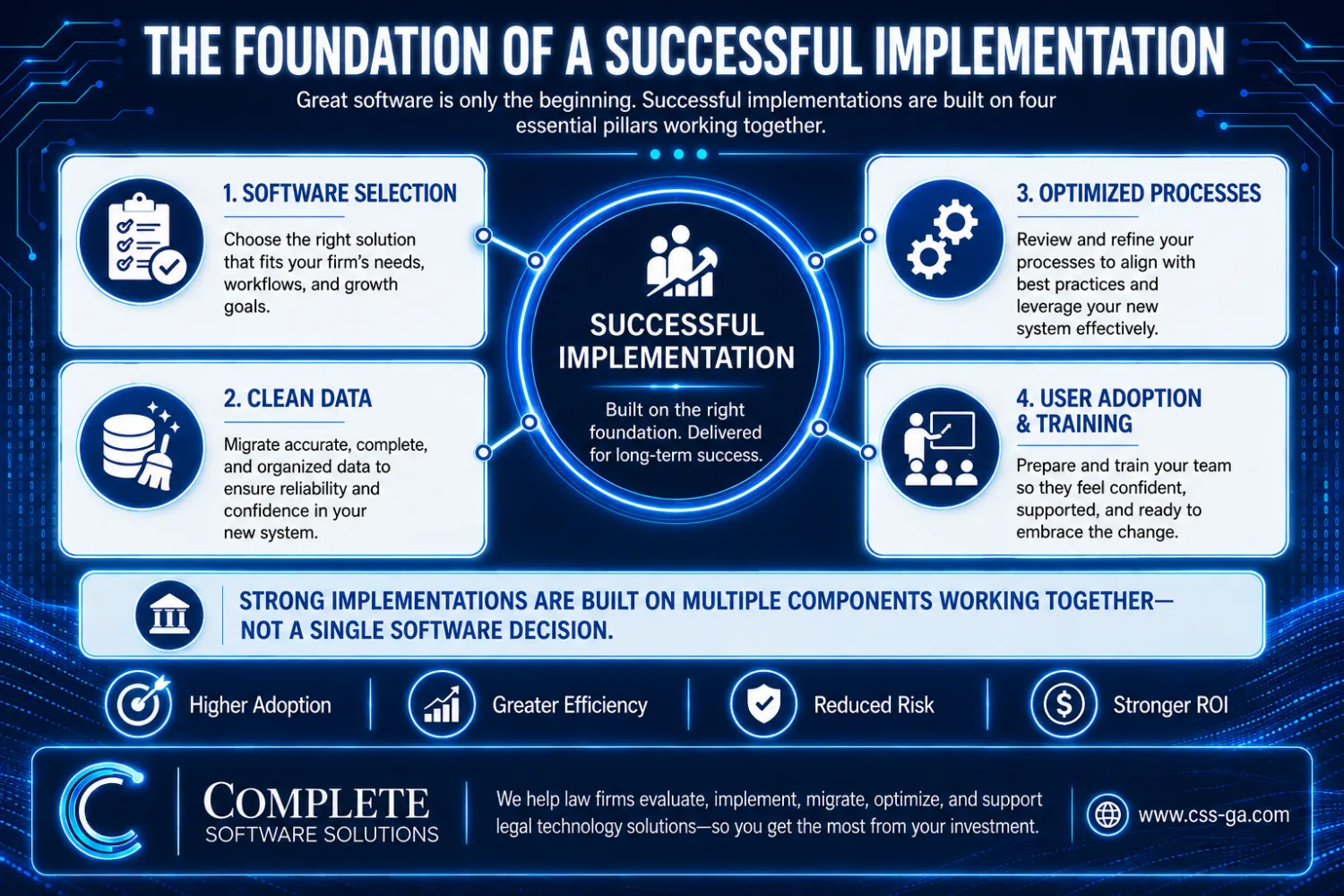
Successful implementations aren’t determined solely by the software you choose. They’re built on careful planning, clean data, effective training, and experienced guidance that aligns technology with the way your firm actually works.
Here are five of the most common reasons software implementations struggle—and how your firm can avoid them.
1. Selecting Software Before Defining Your Firm’s Needs
Many law firms begin by comparing features, attending demonstrations, and talking with vendors. Before doing that, it helps to examine how the firm works today and where its current systems fall short. What do attorneys and staff need to do each day? Where are the bottlenecks? What billing, accounting, reporting, and integration requirements must a new platform meet?
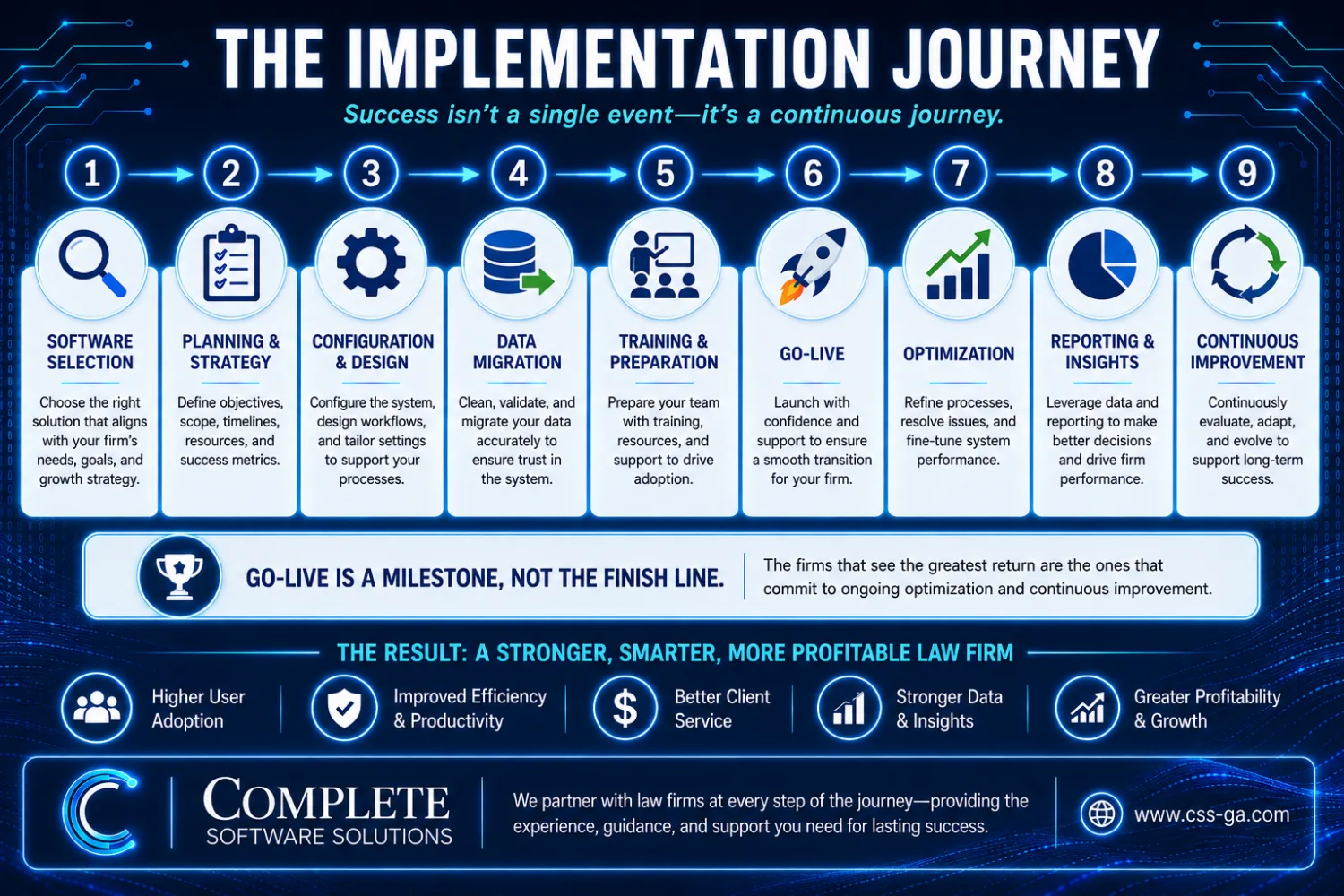
A proper needs analysis gives the firm a basis for evaluating software against its actual requirements. Once a platform is selected, implementation planning, workflow design, data migration, testing, and user training determine how well it works in practice.
Key Takeaway: Define what your firm needs before choosing a platform, then plan how that platform will be put to work.
2. Migrating Bad Data into a New System
Data migration is one of the most critical phases of any implementation. Unfortunately, many firms discover years of duplicate contacts, incomplete client information, inconsistent naming conventions, outdated matters, and inaccurate financial data only after the migration has begun.
Moving poor-quality data into a new platform simply transfers old problems into a new system.
Taking time to clean, organize, and validate your data before migration helps ensure a smoother transition, improves user confidence, and reduces issues after go-live.
Key Takeaway: Clean data creates a stronger foundation for your new system.
3. Skipping Process Review and User Training
A new practice management system shouldn’t simply replicate the way your firm has always worked. An implementation is an opportunity to evaluate existing processes and identify ways to improve efficiency through automation, standardized workflows, and better reporting.
Equally important is user training. Attorneys, accounting staff, administrators, and firm leadership all interact with the software differently. Role-based training gives each group the knowledge and confidence they need to use the system effectively.
Technology delivers the greatest return when people understand how to use it.
Key Takeaway: Better processes and better-trained users lead to better outcomes.
4. Implementing Without Experienced Guidance
Many law firms assume that once they’ve selected a software platform, the vendor will manage every aspect of the implementation. While software vendors provide valuable product knowledge, success also depends on understanding how to align the technology with your firm’s workflows, goals, and day-to-day operations.
An experienced implementation consultant helps turn those needs into a practical plan. They can work with your team on data migration, workflows, reporting, and training while identifying issues early enough to address them before go-live.
Key Takeaway: An experienced implementation partner helps bridge the gap between what the software can do and how your firm needs to work.
5. Viewing Go-Live as the Finish Line
Going live isn’t the end of an implementation—it’s the beginning of using your new system every day.
The first few weeks often reveal opportunities to refine workflows, answer user questions, adjust reports, and improve processes. As your firm grows, your technology should continue to evolve alongside it.
The most successful firms view implementation as the start of an ongoing technology partnership rather than a one-time project.
Key Takeaway: Go-live isn’t the finish line—it’s the starting point for continuous improvement, user adoption, and long-term success.
Final Thoughts
A successful implementation means more than getting the new system live. Your data needs to be reliable, your workflows need to make sense, and your team needs to know how to use the tools in their daily work.
Complete Software Solutions helps law firms plan and carry out that work, from data migration and workflow design through training and support after go-live.
Planning a Software Change? If your firm is preparing for a new system or struggling to get more from its current one, let’s talk about what your team needs to succeed.
Visit www.css-ga.com to get in touch or schedule a consultation.