
Signs It’s Time to Re-evaluate Your Practice Management Software
Technology should make running your law firm easier—not add to your daily frustrations.
Too many law firms find themselves working around their software instead of relying on it. Your team ends up pulling data into manual spreadsheets, routine tasks drag on, and staff invent messy workarounds for automated processes. These daily friction points quietly drain billable hours, eat into profitability, and hurt the client experience.

If this sounds familiar, it’s time to evaluate whether your current practice management system is actually serving your firm or holding you back.
At Complete Software Solutions, we don’t believe in changing software just for the sake of novelty. We help law firms evaluate, implement, optimize, and support legal technology that aligns with exactly how they practice law today—and where they want to grow tomorrow.
Signs Your Tech Is Holding You Back
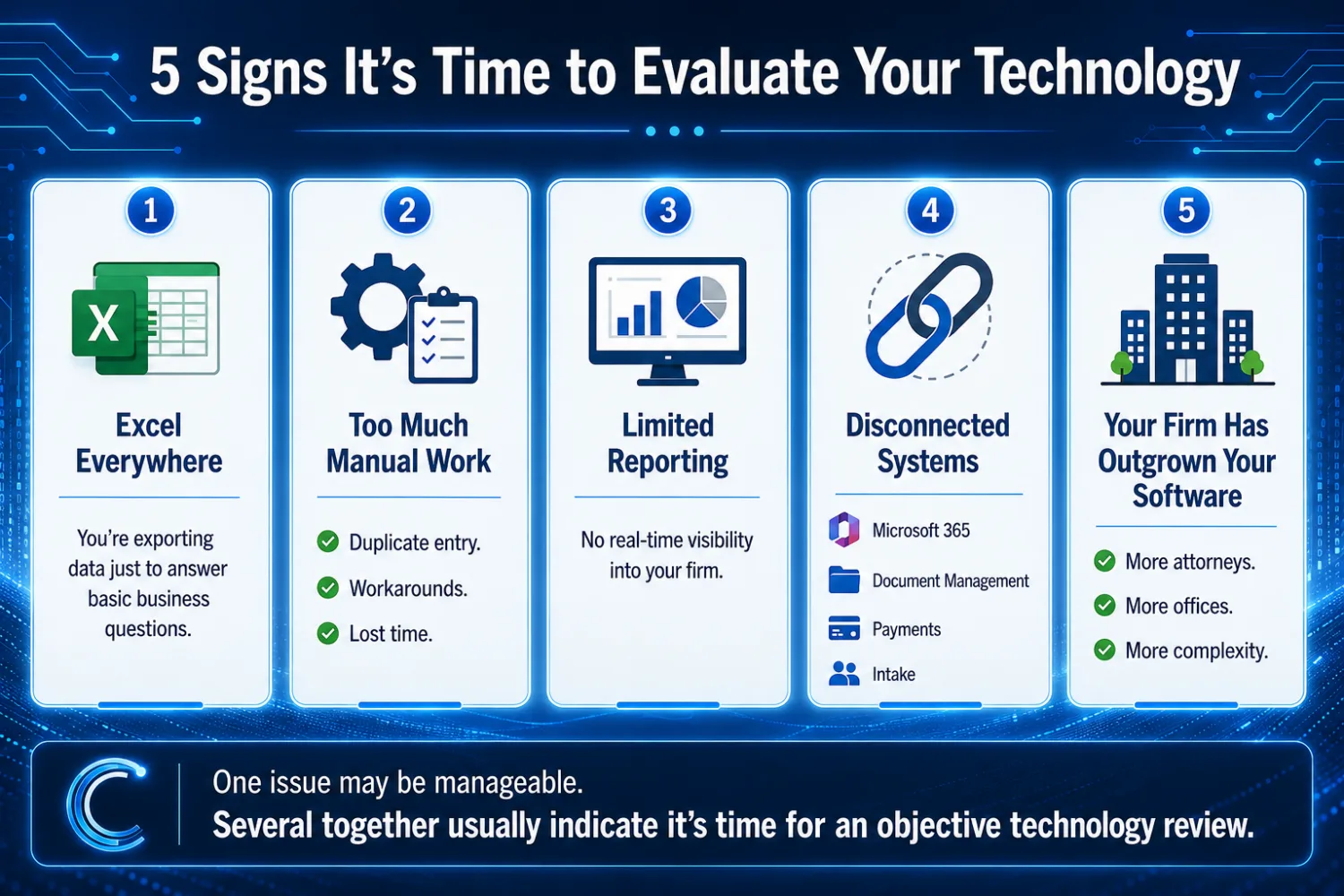
Your practice management software should fuel your firm’s growth, not limit its potential. Look out for these indicators that your technology stack is holding you back.
The Excel Trap: When Spreadsheets Replace Real Insights
If your staff constantly exports data into spreadsheets just to build basic financial reports, track productivity, or view dashboards, your software isn’t doing its job. Modern legal software shouldn’t force your team through hours of manual data manipulation to get clear business intelligence.
Manual Work Slows Everything Down
Your team shouldn’t have to enter the same client information multiple times across different systems. True automation, smart workflows, document templates, and native integrations are supposed to eliminate manual effort—not create a secondary to-do list.
Reporting Leaves You with Blind Spots
Firm leadership needs real-time, push-button answers to critical business questions. You shouldn’t have to piece together multiple reports or run manual calculations just to understand:
- Which practice areas are driving your revenue
- True attorney and paralegal productivity metrics
- Billing, collections, and real-time Work in Progress (WIP)
- Aging Accounts Receivable (A/R) and compliant Trust account balances
- Overall firm financial health
Your Systems Aren’t Talking to Each Other
Today’s law firms depend on multiple technology platforms to keep work moving. But when those systems don’t communicate with one another, staff end up entering the same information multiple times, searching for missing data, and relying on manual workarounds. The result is lost productivity, inconsistent information, and unnecessary frustration.
Your Firm Has Evolved (But Your Tech Hasn’t)
Think about how much your firm has changed over the last few years. Maybe you’ve brought on new attorneys, opened a secondary office, expanded practice areas, or shifted to hybrid work. The platform that served you well five years ago simply might not be built for the architecture of your business today.
Why Software Selection Is Only Half the Battle
Many law firms exhaust all their energy trying to find the “perfect” software package. The reality is that selecting the right platform is only the beginning. A successful implementation requires careful planning, thoughtful configuration, clean data migration, effective training, and ongoing optimization to deliver lasting value.
The ultimate success of your new system depends on the decisions made long before go-live. From implementation planning and data migration to user adoption and long-term support, every phase plays a critical role in achieving a successful outcome. Before moving forward, make sure your firm, software vendor, and implementation partner have clear answers to these important questions:
- Timeline: How long will the implementation and migration take, and how will disruption to the firm be minimized?
- Data Integrity: How will historical client, matter, billing, and financial data be migrated, tested, and validated?
- User Adoption: How will attorneys and staff be trained and supported as they adjust to the new system?
- Workflow Alignment: How will the platform be configured to support the firm’s day-to-day processes?
- Long-Term Support: Who will assist the firm when questions or new needs arise after go-live?
A Successful Implementation Is More Than Moving Data
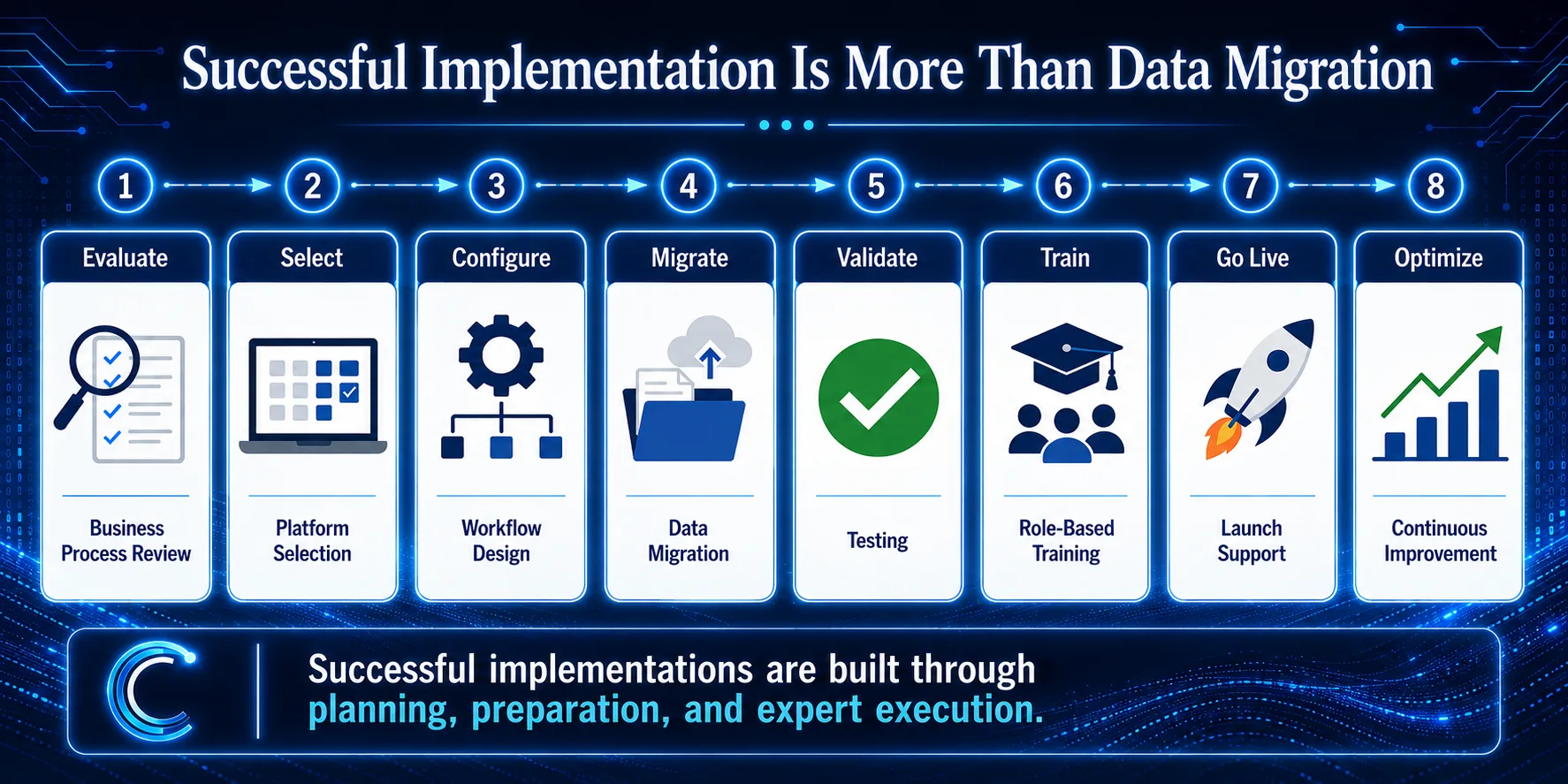
A successful software implementation depends on more than choosing the right platform. It requires careful planning, accurate data migration, thoughtful workflow design, useful reports, and role-based training. Each part of the implementation should reflect how your firm actually works so the technology supports your processes—not the other way around.
Technology Only Delivers Value When People Use It
Even the best software will struggle to deliver value if users don’t understand how to use it. Proper training gives attorneys and staff the confidence to use the system efficiently from day one. This targeted training improves user adoption, reduces internal support requests, increases billing efficiency, and helps prevent manual workarounds.
How Complete Software Solutions Helps Law Firms
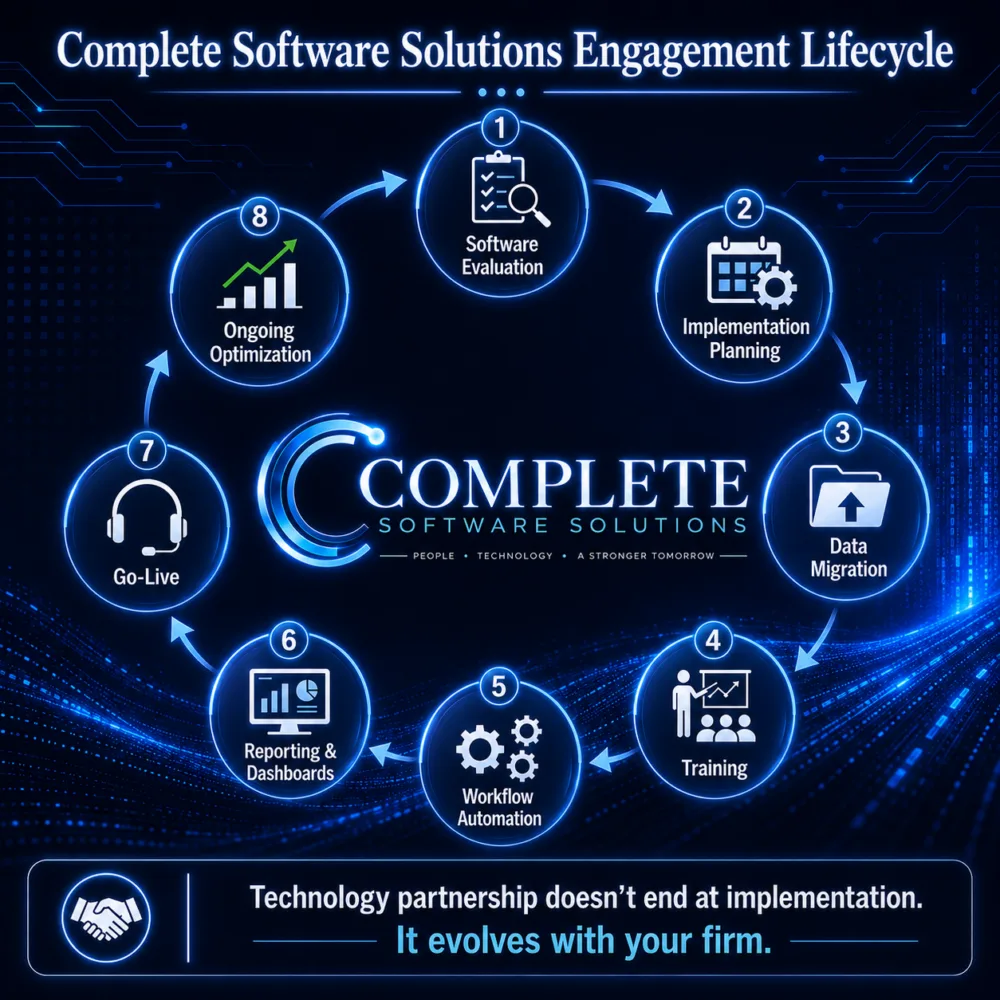
Complete Software Solutions supports law firms through every stage of evaluating, implementing, and improving their legal technology. Our services include software evaluation and selection, implementation planning, data migration, workflow design and automation, custom reporting, user training, and ongoing support.
Whether your firm is moving to a cloud-based platform, replacing an outdated system, or looking to get more from its current software, we help ensure your technology supports the way your firm works today—and where it’s headed next.
Ready to start the conversation?
Contact Complete Software Solutions to schedule a complimentary consultation. We’ll help you determine whether your current platform can be optimized or whether it’s time to move to something better suited for your firm’s future.